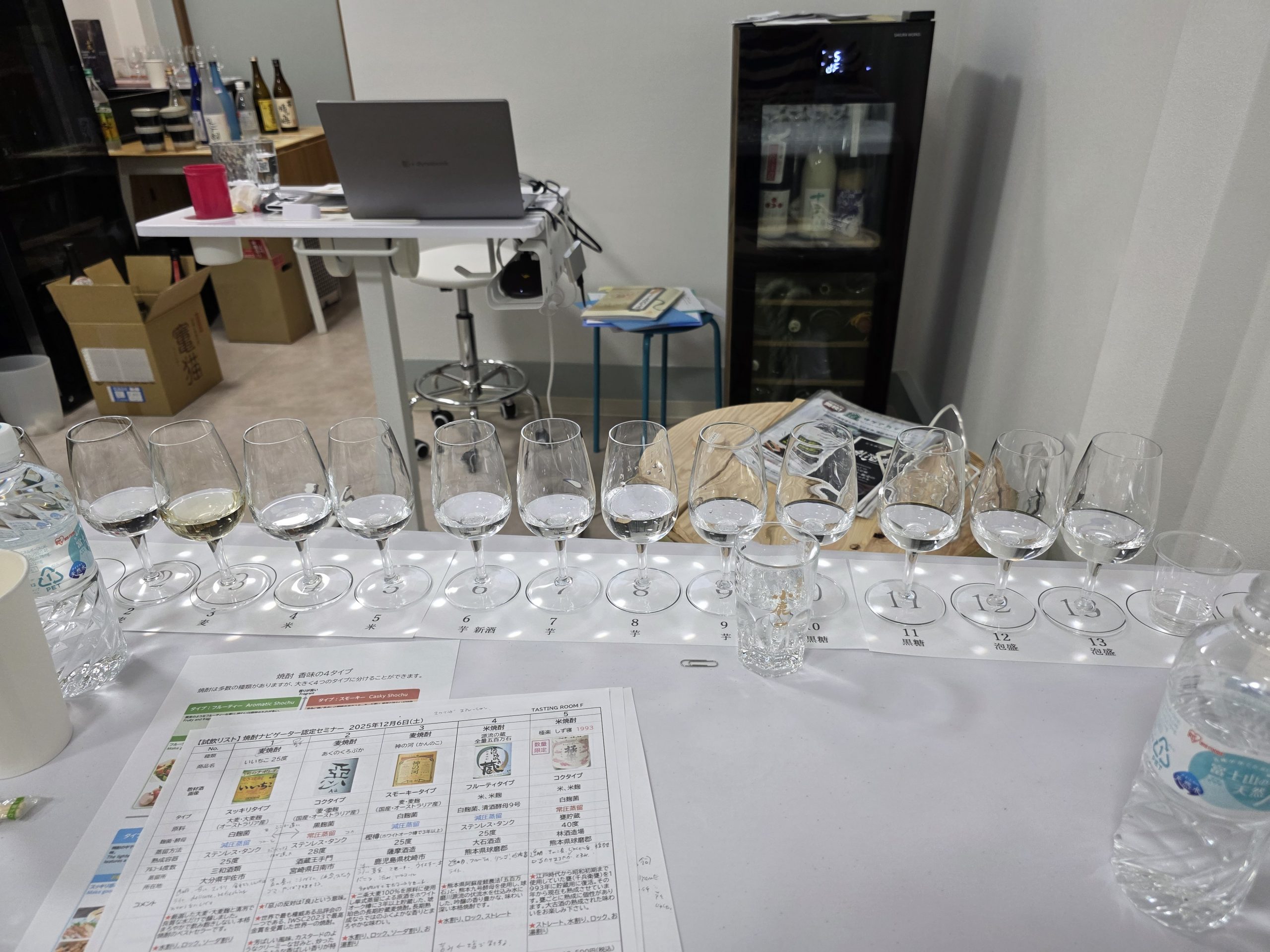
先日、藤川智子先生という日本を代表する酒のソムリエが開催する「焼酎ナビゲーター認定講座」に参加しました。先生についてはリンクを貼っていますので是非飛んで行ってください。当塾の塾長も最近やたら人生の最後が近づいてきた感じがするのか、やっておきたい勉強をそのままにおいてあっちへ行くことが恐ろしくなり、その恐怖心にとりつかれてやたら勉強の計画ばかりしています。勉強はそんなにしていません。
藤川先生の「日本酒ナビゲーター認定講座」にはすでに参加しており、日本酒だけでなくその周囲の情報を楽しく紹介していただいたのみならず、この先生は生徒が家に帰ってから次の行動を起こしてほしく、そうさせるための動機付けもセミナー内でやってくださるので、おかげでこの一年はキャパ以上の日本酒を飲むことになりました。結果とても幸せな一年となったのは言うまでもないわけです。
さて、塾のブログ再開は常々考えていたわけですが、このセミナーを受けたことでついにその重い腰をもう一度上げる気になりました。今回はセミナーで印象に残ったことを忘れないうちに書きとどめておく回にします。
冒頭、日本酒とは何かという質問が出まして、いや日本酒は日本酒だろ、あの透明の甘くて旨くて苦くて、米で出来た…、ですが、焼酎も日本で出来た日本固有の酒なので日本酒なのです。誤解していましたが、もちろん多くの人のイメージ通り、焼酎は九州地方でより多く飲まれる酒ですが、九州だって日本なのに(しかも深めると九州の方が本来的により日本らしいと言えたりする)なぜに焼酎を日本酒と言わないのかはいまどきでは地域間の差別とも言えるわけで、もうこのイントロダクションで、あ、これはすごい話が始まるんだなとその佇まいを正したりしたのでした。
正しくは我々が日本酒と言っている酒は清酒で、日本酒とはその清酒と焼酎のふたつを指すのです。そしてこの二つが日本の「國酒」であり、この場合國酒は常に旧字の國酒と書きます。
その通り、焼酎のことを学ぶのはほぼそのまま九州の文化を学ぶことでした。私は生まれてこのかたずっと関西に住んでいますが、こっちから見れば鹿児島も熊本も宮崎も大分も、というと言いすぎですが、鹿児島と熊本の間にそんなに違いがあるとあえて考えたりできません。しかしこの二県の間には、焼酎文化に関しては大きな違いがあることを知りました。よく飲まれる焼酎の原料だけ見ても、鹿児島は芋、熊本は米なのです。
おそらく今回のセミナーで一番印象的だったのが、鹿児島の人は夕飯のあとに、お湯で薄めたぬるい焼酎をリフレッシュのために飲む、それは本州の人間がお茶を飲むような感じだということです。現在では飲酒のことを考えると即飲酒運転の可能性を考えなければいけませんが、そのくくりがなければ、薄い焼酎をお茶代わりに飲む地域文化があっても全然おかしくないことが容易に想像できます。
鹿児島は米が穫れない地域なので(日本地理で習うシラス台地)沖縄からやってきた芋で焼酎を作りますが、米が穫れる熊本では芋を使う必要はないわけです。芋なんか使ってる薩摩人を大いにけなしたことでしょう。そしてその米焼酎を作る熊本側も高いプライドで酒造りをしています。今回テイスティングで頂いた米焼酎は、蒸留する前から清酒として完成されたものを使っており、その香りは清酒の吟醸香そのものです。なんて贅沢な作り方をしているのかと、各種焼酎蔵が創意工夫していることが分かります。
この講座は焼酎ナビゲーター養成講座ですので、講座終了から私は誰かにお酒のことについて楽しく語れなければならないわけです。でも酒とそれに付随する料理のことは、あまりにも必要知識が膨大で(そのままそっくり人類史を語ることといってもよいほど)どこから手を付けていいか分かりません。そこでこの講座では冒頭からその手法を教えてくれるわけでして、私は今やもうお酒について楽しく語れそうな気持ちでいっぱいです。ただ残念なのは情報のインプットができていないだけです。
具体的にはひとつの作品といってもよいお酒について、原料、製造方法、歴史、郷土料理などの情報をインプットしておけばもうそれを羅列的に言うだけでプロと同じくらいの説明になるということです。私は塾の講師ですから同じようなことをどうにか楽しく生徒に伝える努力をしていますが、いかんせん扱う内容が生徒にとってとっても楽しくない、というか毛嫌いされているものです。ところが食に関して反応しない人はそうそういないわけですから、楽しんで喋って、それを楽しんで聞いてもらえる最高のトピックとなるわけです。
備忘録的にやろうと思っていましたが、情報が多くあり過ぎてこの辺りでいったん止めようと思います。ここまで書いてきたのは開始20分ほどまでのことです。一日がブログ作成で終わってしまう。また細切れにして書き留めておこうと思います。
そしてそれをAIに英語に訳してもらったら、私のオリジナルの日本語より断然読みやすいエッセイになりました。想定読者が英語分かる人も多いのでやってみましたが、とても気が引ける感じです。
Recently, I attended the Shochu Navigator Certification Course led by Tomoko Fujikawa, one of Japan’s most renowned sake sommeliers. I’ll attach a link to her profile in my blog, so please take a look when you can.
Our head teacher at the cram school has lately been feeling that life’s final chapter is approaching a bit too quickly. Perhaps that’s why he’s been drawing up study plans one after another, afraid of leaving too much undone. The actual amount of study he does hasn’t increased all that much—but the sense of urgency is almost endearing.
I had already taken Ms. Fujikawa’s Japanese Sake Navigator course before. She not only introduced the world of sake and its cultural background in a lively and engaging way, but also gave us the motivation to take action once we went home. Thanks to her influence, I ended up drinking far more sake this past year than I normally would. Needless to say, it turned out to be a wonderfully happy year.
This new shochu course finally pushed me to restart my long-neglected blog. Before the memory fades, I want to write down what impressed me the most.
■ The Eye-Opening Question: “What Exactly Is Nihonshu?”
The lecture began with a surprising question: “What is Nihonshu?”
Naturally, I thought, “Well, Nihonshu is just… Nihonshu. The clear, sweet, bitter, delicious drink made from rice.”
But it turns out I was wrong.
Shochu, too, is a traditional Japanese alcohol—and in a broad sense, it is also “Japanese sake.” What we commonly call “Nihonshu” today actually refers more precisely to seishu, or refined sake. The term Japanese sake originally includes both seishu and shochu(Japanese spirits). And these two together make up Japan’s Kokushu—a word that is always written using the old-style character for “country.”
Right from this introduction, I realized:
“Ah—this is going to be a serious and fascinating lecture,”
and instinctively straightened my posture.
■ Learning About Shochu Is Learning About Kyushu
What struck me most this time was how deeply shochu is connected to Kyushu’s culture.
Living in Kansai my whole life, I never gave much thought to the differences between Kagoshima and Kumamoto. Honestly, they felt almost the same from where I sit. But shochu culture reveals that the two prefectures are vastly different.
- Kagoshima → Imo shochu (sweet potato)
- Kumamoto → Kome shochu (rice)
Kagoshima, with its volcanic shirasu soil, cannot grow rice easily. So the people there used sweet potatoes brought from Okinawa to make shochu. Kumamoto, on the other hand, grows plenty of rice and had no need to use potatoes. The two regions once even looked down on each other’s ingredients, each taking pride in their own methods.
One of the rice shochu samples we tasted was particularly striking:
the mash used before distillation was already a fully crafted sake. The aroma was practically identical to a refined ginjo. I couldn’t help but marvel at the level of craftsmanship and the different creative approaches each distillery has developed.
■ In Kagoshima, Shochu as a Post-Dinner “Tea”
Another surprising cultural detail:
In Kagoshima, people often drink a warm, diluted shochu after dinner, almost the same way people on the mainland sip tea to unwind.
Today, of course, drinking always raises concerns about drunk driving. But if that issue didn’t exist, it’s easy to imagine such a tradition taking root naturally. A mild, gentle shochu as a daily relaxant—it actually makes perfect sense.
■ What the Navigator Course Teaches: “How to Talk About Alcohol”
As shochu navigators, we’re expected to be able to share the joy and knowledge of alcohol with others as soon as the course ends. But the world of alcohol and food is enormous—almost inseparable from human history itself—so it’s hard to know where to begin.
That’s why Ms. Fujikawa taught us a simple but powerful method from the very start:
To talk about one drink, all you need is a basic grasp of:
- its ingredients
- how it’s made
- its history
- its local cuisine and culture
Just lining these up allows you to speak with confidence, almost like a professional.
As a cram school teacher myself, this resonated deeply.
I struggle every day to make difficult, often disliked subjects enjoyable for students. But food and drink are universal—almost no one fails to react to them. It’s a topic you can enjoy talking about, and people can happily listen to.
I meant to write only a brief memo for myself, but the information was too rich and I’ve already reached a good stopping point. What I’ve written here covers only the first twenty minutes of the lecture.
At this rate, the entire day could vanish into blogging—so I’ll break the rest into smaller pieces and write them gradually.
コメント